
Generating Your Document
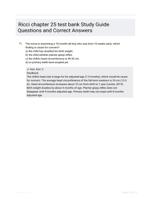
RICCI CHAPTER 25 TEST BANK STUDY GUIDE QUESTIONS AND CORRECT ANSW ... $23.5 Add to Cart
Preview 4 out of 13 pages
Download Document Download$23.50


25.00

20.00

5.00

110.00

110.00
You will receive a PDF that is available for immediate download after purchase. This document remains accessible through your profile at any time, from anywhere, and indefinitely. A copy of the same document will also be sent to your email.
With our satisfaction guarantee, we ensure you'll find the perfect study document for your needs. If you cannot find the particular document that you need, Just contact Us for help.
Purchasing a document on PaperStoc is simple! Just click the 'Add to Cart' button, proceed to checkout, and make your payment using a credit card or any available payment method based on your location. Once your payment is confirmed, you can download the document and enjoy immediate access.
PaperStoc is a marketplace, so you're purchasing this document from the seller, not directly from us. In this case, the seller is **Perfectscorer**. We facilitate the payment process to ensure a smooth transaction between you and the seller.
Absolutely! PaperStoc.com is a legitimate platform. We ensure that all documents listed by sellers are accurate and trustworthy. Additionally, we offer a money-back guarantee to give you peace of mind with your purchases.
PaperStoc is my best source of study materials. I usually buy all my exams here. So nicely done and their support is awesome. I will be back for more… Thanks…

Liberty University
Sam W
I was looking for an example essay to help me write my own. Luckily, I found the exact paper on PaperStoc, and it was all great.

SEU
Jane
This website is my go-to place when am looking for exam / quiz solution. They have all the exams questions and answers and some even include explanations. PaperStoc is my best study resource center… Keep up the great work

Arizona Global
Martin J
I needed help urgently and PaperStoc came through for me. Besides the authentic documents, they have experts who can help you deal with difficult homework questions.
UOP
Prince E
PaperStoc, is my best study resource provider so far, I am confident of finding the best essays, notes and summaries done by my fellow students. Thanks and keep up the great work…

Walden
Christinna F
I find PaperStoc easy to use and most resourceful. They have a variety of study resources and documents. Besides, their support team is awesome and are available 24/7
Southern New Hampshire
Mike T
For long, I had been search for a website that do cheap essays. Now that I found PaperStoc, My mind is at peace. They did my paper very well and it was All Ace...

Southern New Hampshire
Alice
I find Paperstoc to be authentic, easy to use and a community with quality notes and study tips. Now is my chance to help others.
University Of Arizona
Mike T